
Damp Survey Report: What's Included & Why It Matters
Our structured survey reports go beyond basic damp surveys. See exactly how evidence-based findings, risk levels, and recommended remedial actions are documented.
Most damp reports are brief and unclear. Our survey reports are structured, evidence-based, and designed for real decision-making.
View Example Survey Reports
We provide two types of structured survey report — one for domestic property owners and one for housing providers and social landlords. Both follow the same evidence-based methodology, but housing provider reports include compliance-focused risk classification and action timescales aligned with Awaab's Law.
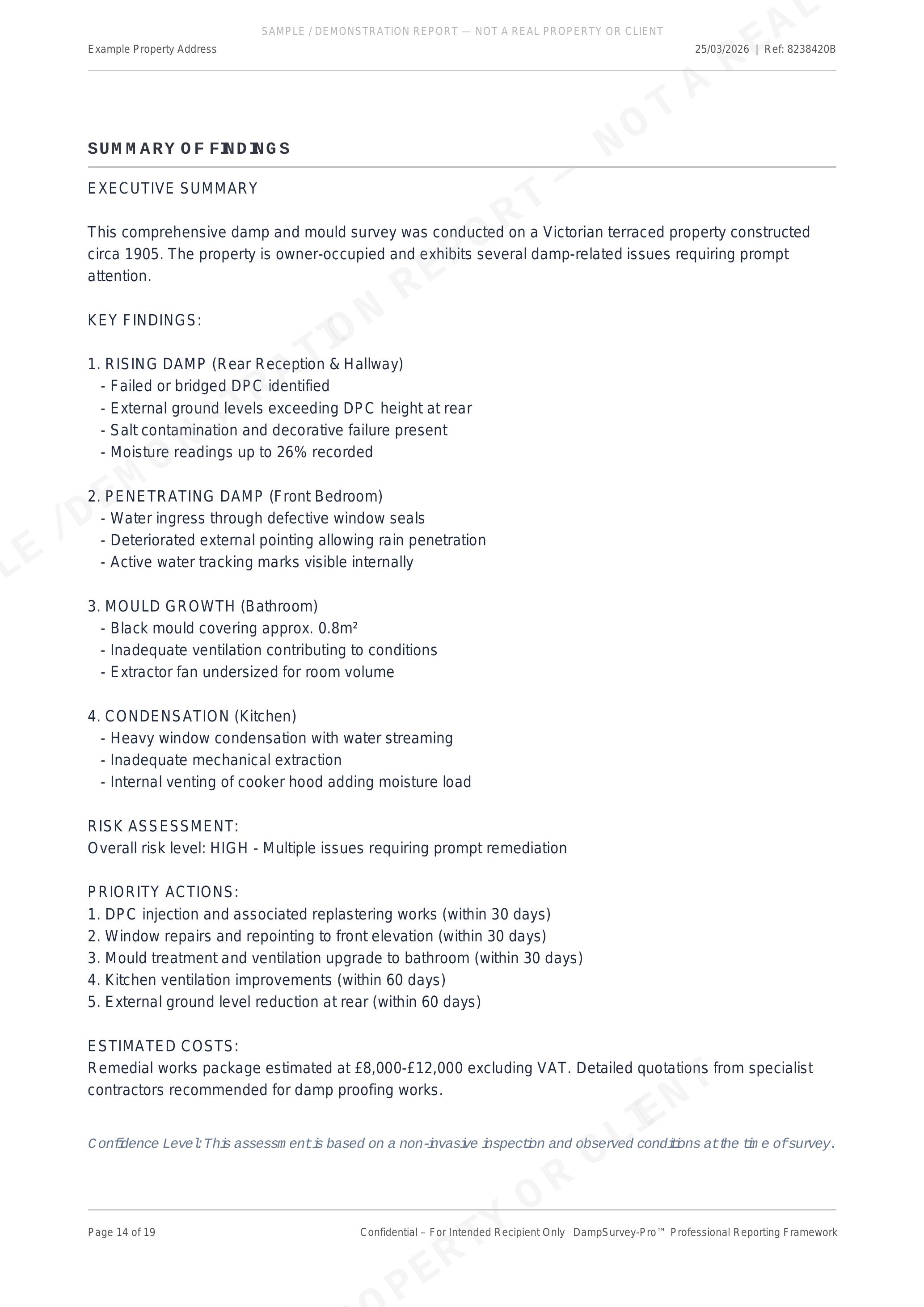
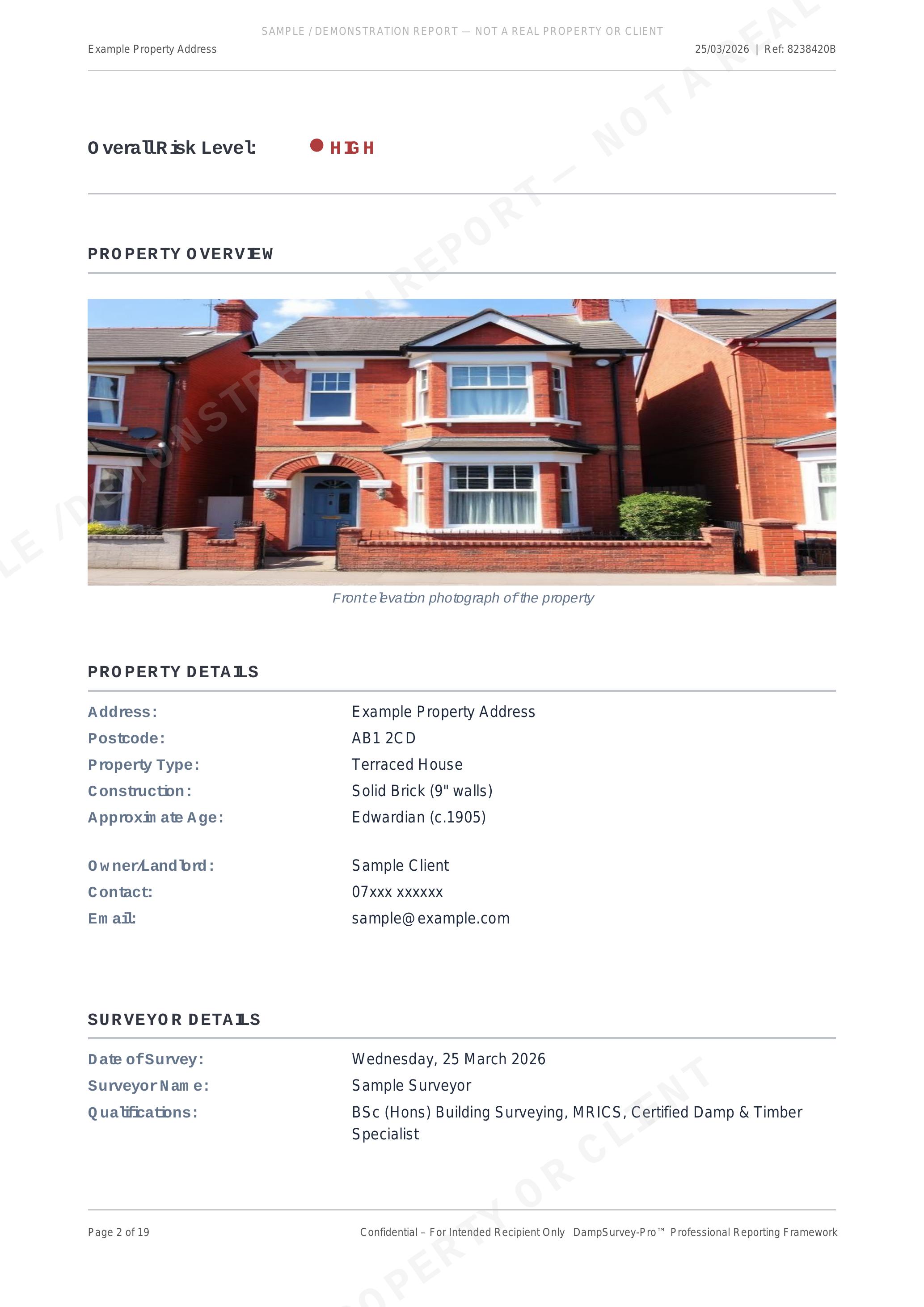 Property Overview & Risk Level
Domestic Damp & Mould Survey Report
Example report showing how findings, moisture readings, photographic evidence, and recommended remedial actions are clearly structured.
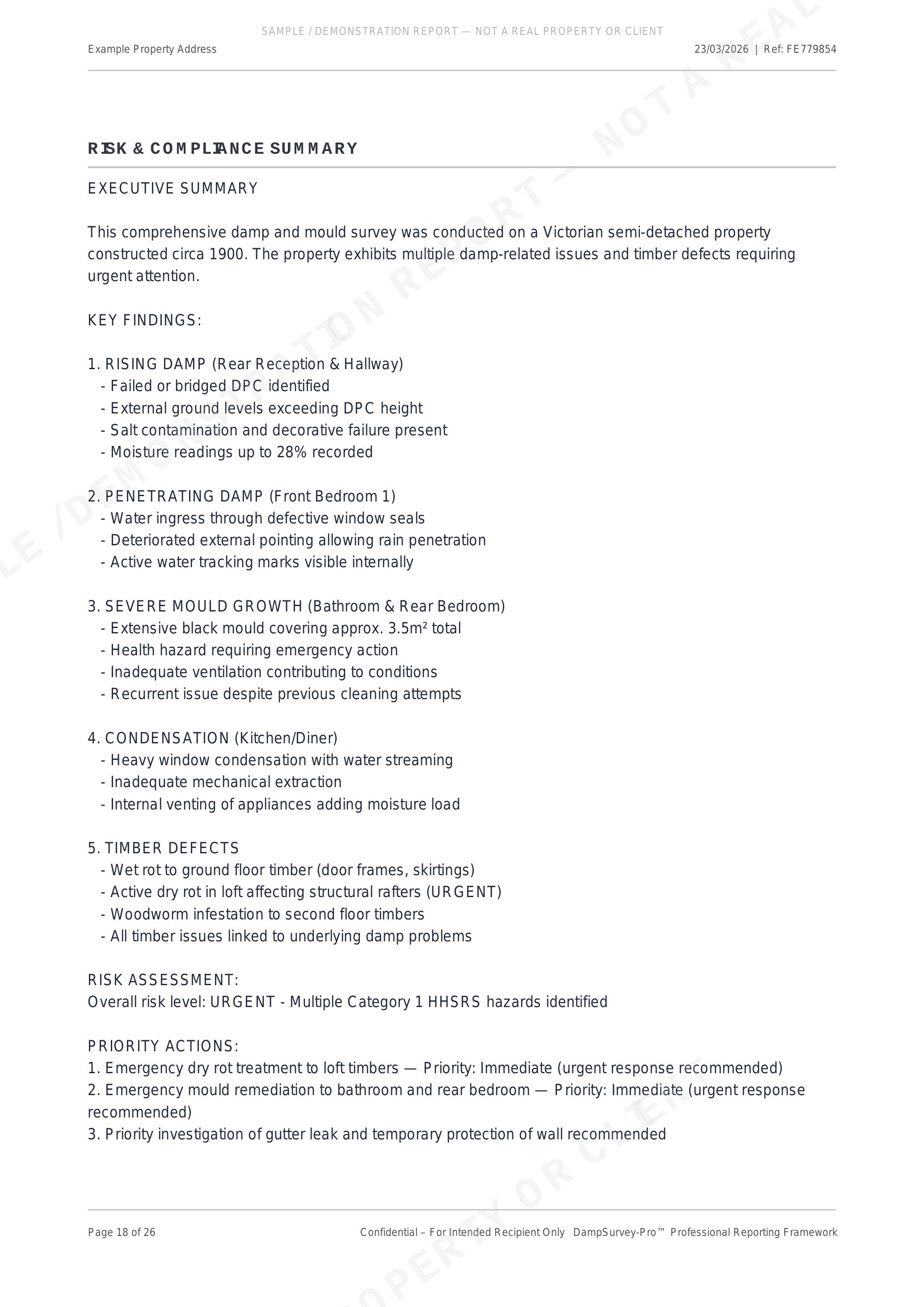
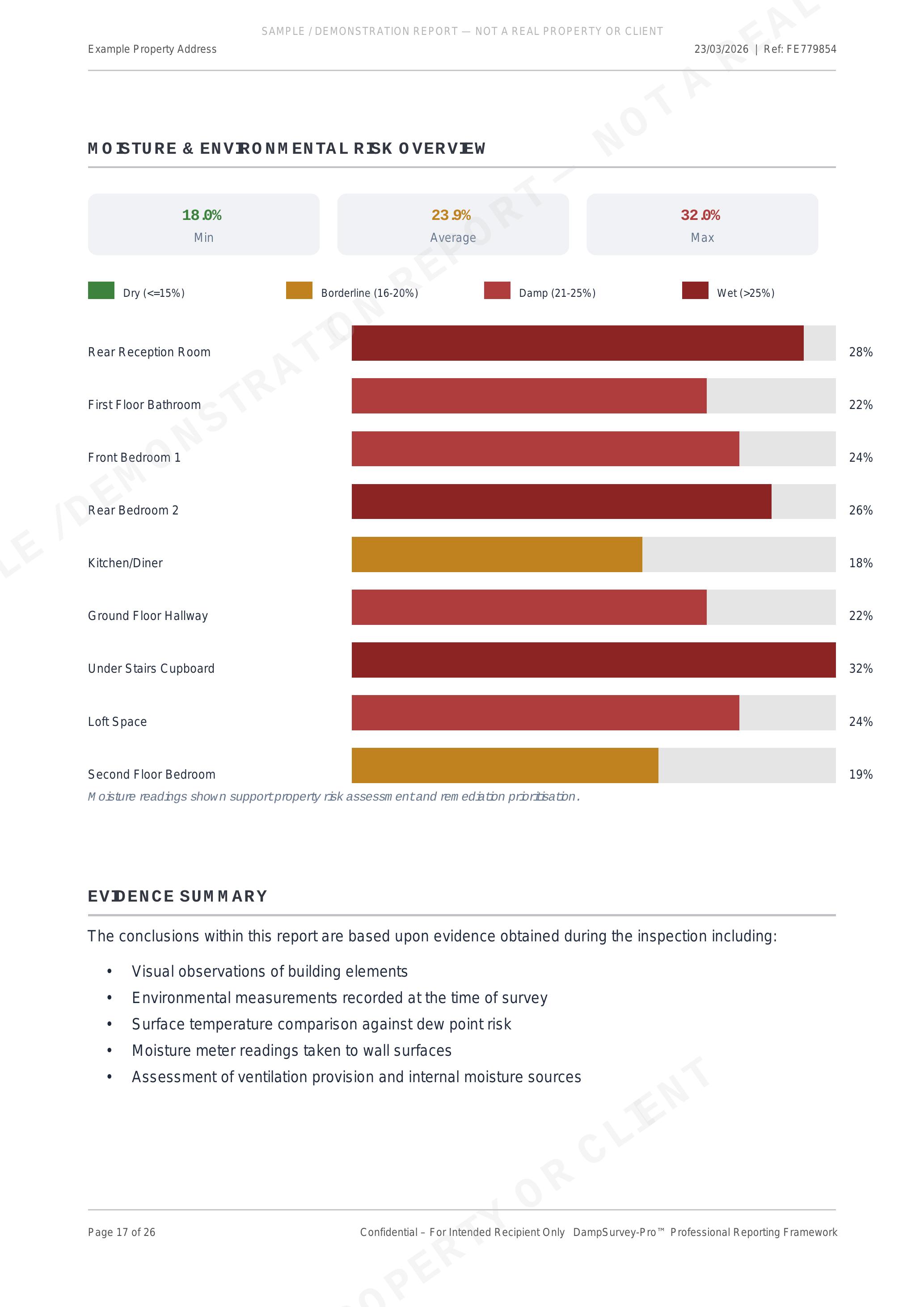 Moisture Readings & Data
Social Housing Damp Survey Report
Example report showing risk levels, action timescales, and compliance-focused reporting suitable for housing provider cases.
Why Structured Reports Matter
A damp survey report isn't just a summary of what was found — it's a structured, evidence-based document designed to provide clarity on the root cause of moisture problems and the appropriate remedial response.
For housing providers, this means compliance-ready documentation aligned with Awaab's Law. For private clients, it means clear, defensible findings that support informed decision-making.
What's Included in Every Survey Report
- Property details and background context
- Scope and methodology of the survey
- Environmental readings (temperature, humidity, dew point)
- Moisture mapping with Protimeter and thermal imaging data
- Photographic evidence of all findings
- Root cause diagnosis — not assumption-based conclusions
- Risk level classification (Category 1, 2, or 3)
- Recommended remedial actions with prioritised timeframes
- Compliance notes relevant to HHSRS and Awaab's Law
Report Structure Breakdown
Section 1: Property Overview
Address, property type, date of survey, and tenant/owner details.
Section 2: Survey Methodology
Equipment used, areas assessed, environmental conditions recorded.
Section 3: Findings & Evidence
Detailed observations with moisture readings, thermal images, and photographs.
Section 4: Root Cause Analysis
Evidence-based diagnosis identifying the true source of damp or mould.
Section 5: Risk Assessment
HHSRS-aligned risk categorisation with severity and urgency rating.
Section 6: Recommended Remedial Actions
Prioritised actions with suggested timeframes and responsible parties.